
Clean Carts Real or Fake?
Clean Carts Real or Fake? How to Tell, and Why It Matters for Your Lungs
If you’ve typed “clean carts real or fake” into Google, you’re asking the right question. You’ve probably seen the Clean Carts brand everywhere: bright boxes, dozens of strain names, and sellers promising “lab-tested” THC oil. The name makes the product sound safe. But the name is a marketing claim, not a guarantee, and that gap is exactly what this guide covers.
Here you’ll learn what Clean Carts actually are, why you can’t verify them the way you can a licensed product, how to spot a counterfeit cartridge, what public health agencies found during the 2019 vaping lung injury outbreak, and what the law says in the USA and Canada.
The short answer: Clean Carts isn’t a brand you can trace to a licensed, state-regulated or Health Canada-regulated producer. A cartridge bought outside a licensed dispensary or authorized retailer has no testing you can check, whatever the box says.
What are Clean Carts?
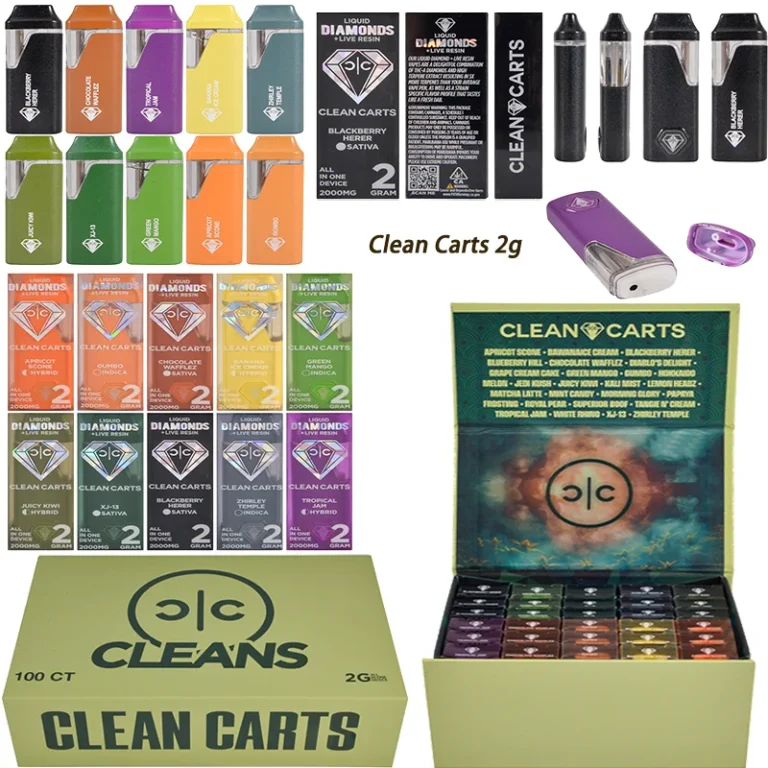
Clean Carts are THC vape cartridges sold under a brand name that circulates mainly online and through unlicensed sellers. You’ll find them on social media, mail-order websites and pop-up shops, usually in 1g or 2g sizes and in flavor-heavy strain names.
The problem is not the name itself. It’s that nobody can point to a licensed company that makes them.
Why the Clean Carts brand is so hard to verify
Legal cannabis products in the USA and Canada carry a paper trail. A licensed producer is registered with a state regulator or Health Canada, every batch is tested by an accredited lab, and the package carries the required warnings and symbols.
Unlicensed “brands” work differently. Investigators have found that empty cartridges and printed boxes for these brands are sold wholesale, so anyone can fill them. reported websites selling 100 empty carts with copycat labels for about $18. The CDC describes the best-known example, Dank Vapes, as a class of largely counterfeit products of unknown origin, marketed under one name.
That’s why two “Clean Carts” boxes from two sellers can hold completely different oil. The brand on the packaging tells you nothing about who filled the cartridge or what went into it.
Clean Carts real or fake? 6 ways to spot a counterfeit cartridge
No single check proves a cartridge is safe. Fakes copy holograms, QR codes and even state warning symbols. But the warning signs below, taken together, tell you a lot.
1. Where you bought it
This matters more than anything printed on the box. Licensed products are sold only through state-licensed dispensaries in the USA, or provincially and territorially authorized retailers in Canada. A cart from a social media seller, a mail-order site, a gas station or a friend has no verified supply chain.
2. The price looks too good
Testing, licensing and taxes cost money. A cartridge selling for far below local dispensary prices is a classic red flag. A cannabis safety advocate told Rolling Stone that a $20 cart is simply too good to be true.
3. Missing required labels
- USA: a state-specific THC warning symbol, a license number, batch or lot number, and a test date.
- Canada: an excise stamp coloured for your province or territory, the standardized red THC symbol, a yellow bilingual health warning box, and child-resistant packaging..
4. A lab report you can’t trace
A real certificate of analysis (COA) names an accredited lab, matches the batch number on your package, and can be confirmed on the lab’s own website. A QR code that leads to a generic page, a PDF with no lab license, or one report used for every flavor is a warning sign.
5. Dozens of flavors and constant new packaging
Unlicensed brands often list huge flavor menus and change packaging versions frequently. That pattern matches counterfeit packaging sold in bulk, not a licensed producer’s tested product line.
6. The oil itself
Bubble tests and color checks are popular online, but they’re unreliable. Additives can be chosen to mimic the thick look of real distillate. Don’t treat any home test as proof of purity.
Are Clean Carts safe? The real health risks of counterfeit carts
The biggest documented risk is lung injury. In 2019, the USA saw an outbreak of a condition the CDC named EVALI (e-cigarette, or vaping, product use-associated lung injury).
What the EVALI outbreak showed
- By February 18, 2020, the CDC had received reports of 2,807 hospitalized cases or deaths across all 50 states, D.C. and two territories, with 68 deaths confirmed.
- 82% of hospitalized patients with substance-use data reported using THC-containing products. Among those who said where they got them, 78% obtained them only from informal sources such as friends, dealers or online sellers.
- Vitamin E acetate, an oily additive used to thin or bulk up THC oil, was found in lung fluid from 48 of 51 EVALI patients tested, and in none of the comparison group without EVALI.
Other contaminants found in illicit carts
Vitamin E acetate isn’t the only concern. Independent lab tests of unlicensed cartridges have found:
- Pesticides: one tested cartridge was 1,780 times over California’s limit for myclobutanil (Leafly).
- Heavy metals that can leach from low-quality cartridge hardware.
- Thinning agents and unknown flavorings that were never tested for inhalation.
Warning symptoms to know
EVALI symptoms reported by the CDC include cough, shortness of breath, chest pain, nausea, vomiting, fever and fatigue. Anyone who develops these after vaping should stop and seek medical care, and tell the doctor what product they used.
The CDC’s advice is direct: don’t use THC-containing vaping products, especially from informal sources.
Licensed carts vs Clean Carts: a side-by-side comparison
| What to check | Licensed cartridge | Clean Carts or other unlicensed carts |
|---|---|---|
| Where it’s sold | State-licensed dispensary (USA) or provincially authorized retailer (Canada) | Social media, mail-order sites, pop-up shops, street sellers |
| Producer | Registered, licensed company you can look up | No traceable company |
| Lab testing | Mandatory testing for potency, pesticides, solvents and heavy metals | Unknown; lab reports often generic or unverifiable |
| Packaging | Required warnings, THC symbol, batch number; excise stamp in Canada | Copycat boxes sold in bulk; packaging changes often |
| Additives | Regulated; vitamin E acetate banned in many states | Unknown, and the main suspect in the EVALI outbreak |
| Recalls | Products can be traced and recalled | No recall system |
| Price | Includes testing, taxes and licensing | Often far cheaper than legal products |
A quick safety checklist before using any THC cartridge
- Buy only from a licensed dispensary or an authorized retailer you can verify on your state or provincial regulator’s website.
- Check for the required warning symbol, batch number and, in Canada, the excise stamp.
- Confirm the lab report on the lab’s own site, using the batch number on your package.
- Avoid carts that are unusually cheap, sold in dozens of flavors, or shipped by mail.
- Never add anything to a cartridge, and don’t buy oil to refill one.
- If you notice cough, chest pain or shortness of breath after vaping, stop and see a doctor.
The bottom line on Clean Carts
Clean Carts sound reassuring, but the name proves nothing. There’s no licensed producer behind the brand, no lab report you can reliably trace, and no recall system if something goes wrong. Public health agencies in both countries say the same thing: illicit THC carts from informal sources carry real risks, and the 2019 EVALI outbreak showed how serious those risks can be.
If you choose to use cannabis, the safest step is simple. Buy tested products from a licensed dispensary in a legal US state, or from a provincially authorized retailer in Canada, and check the packaging every time.
Frequently asked questions about Clean Carts
Are Clean Carts real or fake?
Clean Carts aren’t made by any licensed company you can trace. The packaging is widely available, so anyone can fill and sell them. Treat any Clean Carts product as unverified, whatever the box claims.
Are Clean Carts safe to vape?
There’s no way to confirm what’s inside. Unlicensed THC carts have been linked to serious lung injuries, and the CDC advises against using THC vape products, especially from informal sources.
Can a QR code or hologram prove a cart is real?
No. Counterfeiters copy QR codes, holograms and even state warning symbols. Only a licensed retailer and a lab report you can confirm on the lab’s own website give real assurance.
Are Clean Carts legal in the USA?
No. They aren’t produced or sold under any state license, so they’re illegal even in states with legal cannabis. Mailing THC products is also a federal crime.
Are Clean Carts legal in Canada?
No. Legal cannabis vapes in Canada are sold only by provincially or territorially authorized retailers and carry an excise stamp. Clean Carts don’t meet either requirement.
What is vitamin E acetate, and why does it matter?
Vitamin E acetate is an oily additive that some illicit producers used to thicken or dilute THC oil. It was found in the lung fluid of 48 of 51 EVALI patients the CDC tested, making it the leading suspect in the 2019 outbreak.
What should I do if I think I vaped a fake cart?
Stop using it. If you develop cough, chest pain, shortness of breath, nausea or fever, see a doctor and tell them what you vaped. Keep the cartridge in case it needs to be tested.